Personal analytics 8 min
Mood Tracking and Work Performance Without False Conclusions
Learn how to compare brief mood check-ins with focus and meaningful work while respecting context, privacy, and causal limits.
Read field noteTracking tools · Commercial investigation for a mood tracker suited to journaling, emotional awareness, symptoms, or personal analytics
Compare Daylio, How We Feel, Apple Health, Bearable, and Swaymark by logging style, privacy model, health context, and intended use.

Mood tracking can serve very different jobs. You may want a two-tap diary, language for naming an emotion, a symptom record to discuss with a clinician, or a way to understand why work felt unusually fluid or difficult. Choosing by feature count misses those differences.
A good mood app makes honest logging easy and shows patterns without pretending to diagnose you. Some people need a simple daily marker while others need detailed emotional vocabulary or health context. The best fit is the one whose check-in and review loop match the decision you need to make.
Daylio is suited to quick entries built from a mood and activities. How We Feel offers a more detailed emotion vocabulary plus regulation strategies. Apple Health provides first-party state-of-mind logging and comparisons with lifestyle factors. Bearable focuses on configurable symptoms, factors, reports, and experiments. Swaymark connects simple mood check-ins to personal recovery and work context.12456
| Tool | Best for | Logging style | Important consideration |
|---|---|---|---|
| Daylio | Fast daily diary | Mood plus activities and optional notes | Focused more on journaling than work analytics |
| How We Feel | Emotional awareness | Specific emotion check-ins and context | Review optional account, research, and AI settings |
| Apple Health | Built-in health context | Momentary emotion or daily mood | Best within the Apple ecosystem |
| Bearable | Symptoms and factors | Highly configurable health diary | More setup can be useful but demanding |
| Swaymark | Mood and work patterns | 1 to 10 check-ins with notes | Educational analytics, not clinical care |
Daylio describes a two-step entry built around mood and activities, with goals, statistics, and exports. That low-friction structure works when consistency matters more than emotional granularity. How We Feel offers a richer emotion map and tools intended to help users understand and regulate feelings, which may suit someone building emotional vocabulary.12
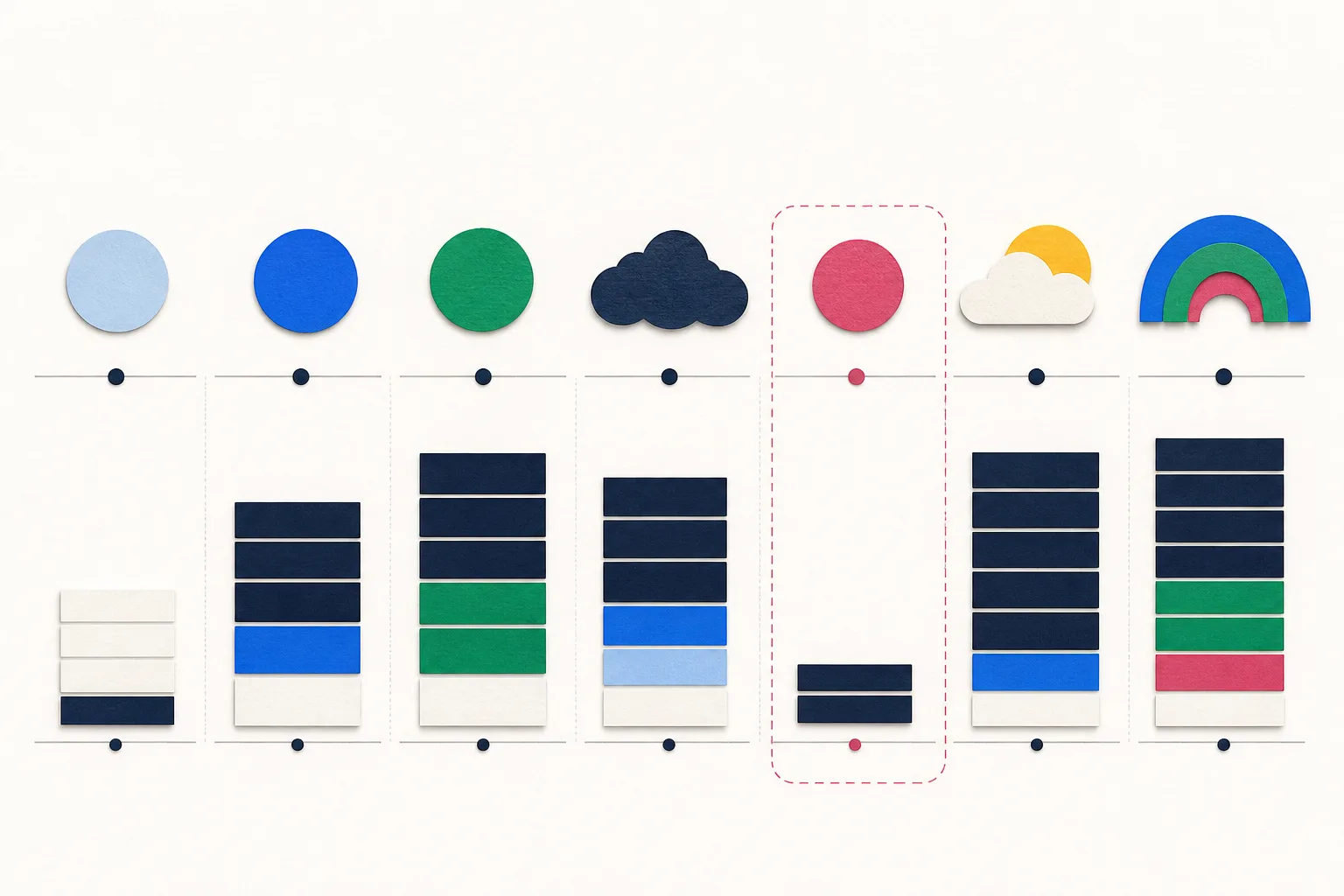
Granularity is useful only if you can sustain it. A single daily rating may conceal changes within the day, while frequent detailed check-ins may become burdensome. Pick a cadence you can maintain through busy and difficult periods, because selectively logging only calm days creates a misleading history.
How We Feel documents account-free local use alongside optional accounts, research sharing, health data, and AI features. Daylio says entries are stored locally by default with optional backup mechanisms. These models are not interchangeable, so inspect the exact settings you plan to enable.31
Look for a clear answer to four questions: Is an account required? Where are entries stored? Which integrations can read or write data? Can you export or delete it? Sensitive notes deserve more scrutiny than a generic claim that an app is private.
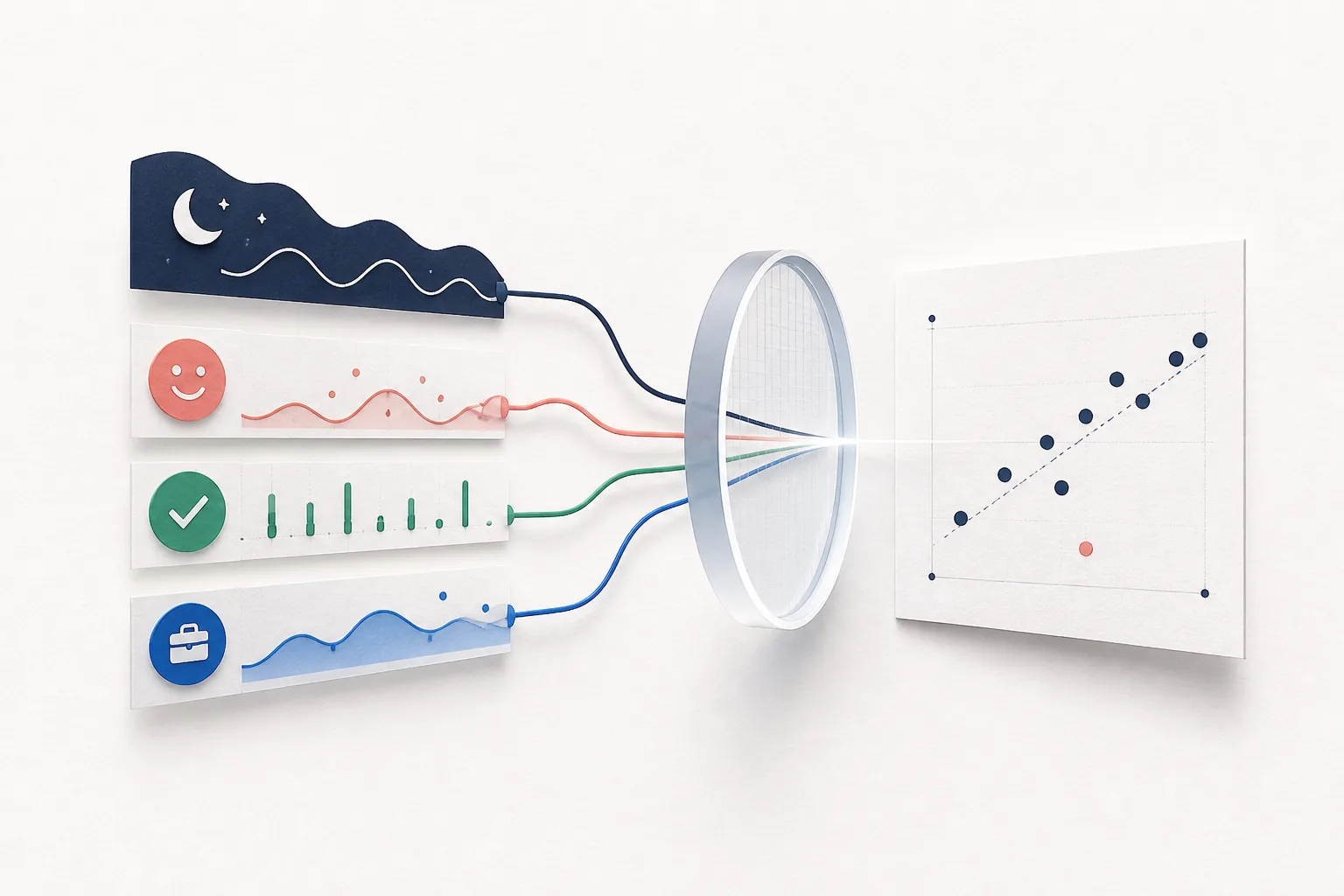
Apple Health can compare state of mind with lifestyle factors such as exercise, sleep, and time in daylight. Bearable lets users examine symptoms, mood, and configurable factors. Swaymark adds observable work context, including GitHub contributions and optional product signals, to help a person ask whether certain conditions tended to move together.456
A pattern is a prompt for reflection, not proof of cause. Mood and work can influence one another, and both can respond to unrecorded events. Review timing, missing check-ins, sample size, and counterexamples. Persistent or concerning mood changes deserve support from a qualified health professional, not an app-generated conclusion.
Put it into practice
Plain answers
Daylio is designed around a fast mood and activity entry. Apple Health is convenient if you already use an iPhone and want built-in state-of-mind logging. Ease still depends on your preferred level of detail.
No general mood journal should be treated as a diagnosis. It can help you remember patterns and prepare for a conversation, but clinical concerns belong with a qualified professional.
Choose a cadence you can sustain. One daily check-in supports broad trends, while a few event-linked check-ins can reveal within-day changes. Consistency matters more than maximum frequency.
Bearable is designed around configurable symptoms, factors, and health reports. If clinical sharing is central, confirm that its current export format meets your clinician's needs.
Swaymark is designed to place mood beside recovery, habits, GitHub, and optional product signals. It shows associations to investigate, not proof that mood caused a work result.
Learn how to compare brief mood check-ins with focus and meaningful work while respecting context, privacy, and causal limits.
Read field noteCompare Swaymark and Daylio by mood logging, habit context, health and work connections, privacy model, and the questions each app answers best.
Read field noteCompare Swaymark, Exist, Gyroscope, Bearable, and focused trackers by data sources, questions answered, evidence limits, and daily effort.
Read field note