Tracking tools 11 min
The Best Mood Tracker Apps for Check-Ins, Journaling, and Patterns
Compare Daylio, How We Feel, Apple Health, Bearable, and Swaymark by logging style, privacy model, health context, and intended use.
Read field notePersonal analytics · Understand whether mood relates to work performance and build a responsible personal tracking method.
Learn how to compare brief mood check-ins with focus and meaningful work while respecting context, privacy, and causal limits.
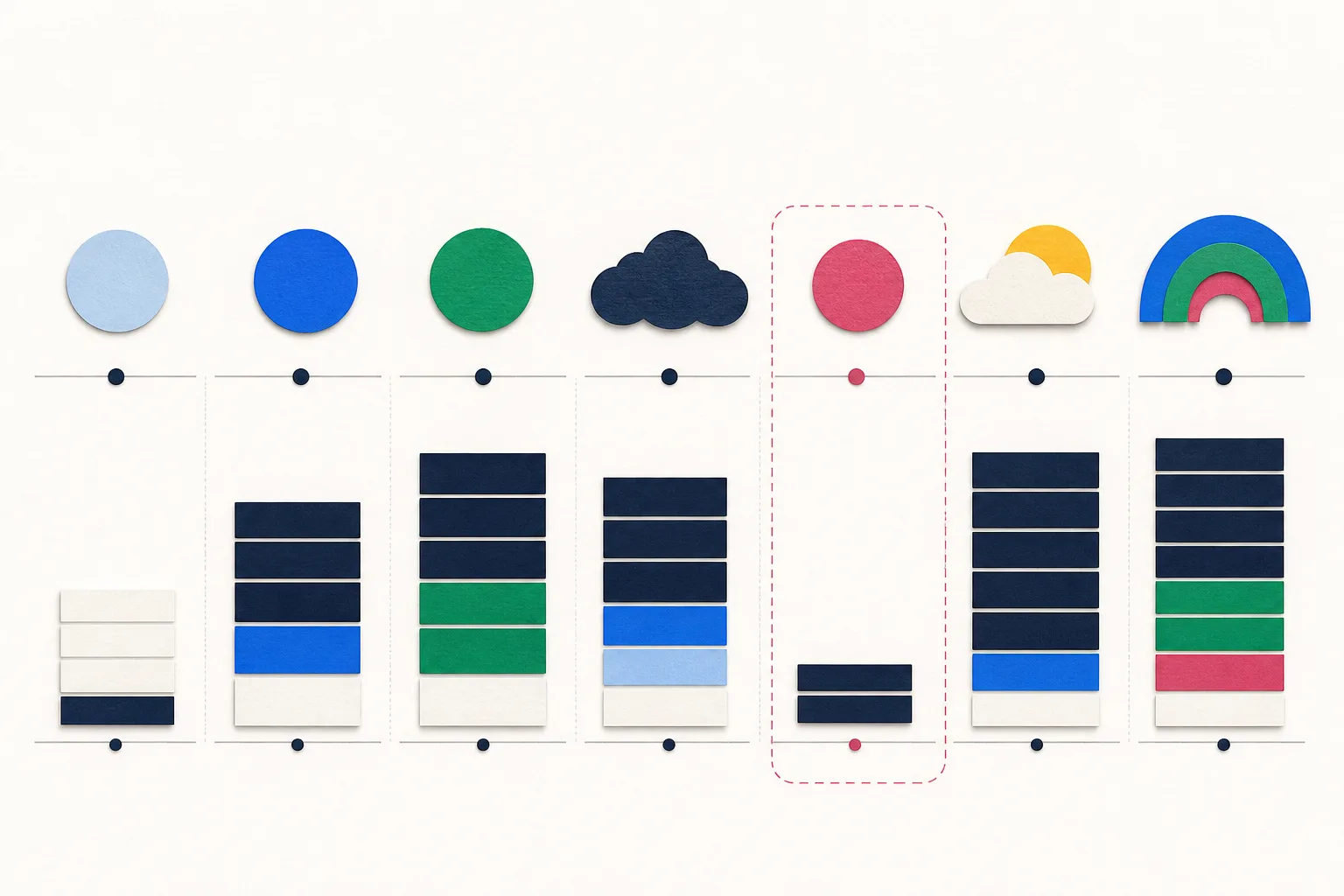
A hard workday can lower your mood, and a low mood can change how work feels. Because influence can run in both directions, an end-of-day check-in cannot tell you which came first. It can still become useful when the timing and question are clear.
The aim is not to manufacture a cheerful productivity score. It is to notice whether certain emotional states repeatedly coincide with focus, withdrawal, creative work, or administrative follow-through, then make a small supportive adjustment while keeping exceptions visible.
Within-person research has examined state mood alongside task performance, citizenship behavior, and work withdrawal. The important implication for personal tracking is that mood and work behavior can vary together within the same person, not that one mood rating predicts a universal outcome.1
Mood-app research also shows that products differ in how they capture feelings, provide insights, and support action. Logging alone is not automatically helpful. A check-in becomes more useful when it is quick enough to sustain and tied to a specific reflection or decision.2
Apple Health distinguishes a momentary emotion from an overall daily mood and lets people add context. Whatever tool you use, choose one consistent prompt and time. A morning check-in can support a forward-looking question; an evening check-in may reflect what happened during work.3
Define work separately. A focus rating, completed planned block, or clearly scoped outcome says something different from contribution activity. GitHub contributions follow platform rules and do not measure quality, emotional effort, customer care, or invisible thinking.4
| Check-in | Useful question | Main limit |
|---|---|---|
| Before work | Did starting mood tend to coincide with later focus? | Anticipation of the day may shape the rating |
| After a focus block | How did mood and perceived focus move together? | The task itself may have changed mood |
| End of day | How did the whole day feel beside its outcomes? | Recent events and recall may dominate |
Collect several ordinary weeks, then compare the same mood timing with the same work outcome. Show the number of observations and the days that do not fit. Add workload, sleep, social context, illness, and launch pressure when those factors are known.
Avoid a rule such as I should only create when I feel good. A better observation might be: On lower-mood mornings, long unstructured tasks were less likely to finish, but small review tasks were unchanged. That result suggests testing task shape, not trying to force a mood.1
A useful experiment changes the environment rather than demanding a feeling. You might define smaller done criteria, protect a quiet first hour, schedule fewer context switches, or move a routine task to a lower-energy window. Keep the test short and review whether the same outcome changed.
Mood tracking is not diagnosis or treatment. If mood changes are persistent, severe, frightening, or interfere with daily life, seek qualified mental-health or medical care. If tracking increases rumination or distress, pause it. A missing check-in is not a failure.
Put it into practice
Plain answers
No. Mood and work relationships vary by person, task, timing, and context. A positive mood is not a universal performance multiplier, and low mood does not erase capability.
Log before work for a prospective comparison, or immediately after a defined work block for a concurrent one. Keep the timing consistent and state which question it supports.
Use one meaningful outcome such as completing a planned focus block, plus an optional focus rating. Avoid equating hours online or contribution counts with quality.
A general personal tracker cannot diagnose a condition. Persistent, severe, or concerning mood changes should be discussed with a qualified health professional.
Pause or stop. Reduce frequency, remove streak pressure, and seek support if distress persists. Tracking is optional and should serve you, not create another obligation.
Compare Daylio, How We Feel, Apple Health, Bearable, and Swaymark by logging style, privacy model, health context, and intended use.
Read field noteUse habit tracking to test whether routines support focused work without confusing streaks, activity, and meaningful output.
Read field noteA practical, evidence-led guide to comparing sleep duration and consistency with focus, output, mood, and sustainable work.
Read field note