Tracking tools 10 min
The Best Habit Tracker Apps for Different Ways of Building Habits
Compare focused habit trackers, flexible routine tools, private open source options, and cross-signal personal analytics to find the right fit.
Read field notePersonal analytics · Learn how to connect habit completion with productive work and avoid misleading streak-based conclusions.
Use habit tracking to test whether routines support focused work without confusing streaks, activity, and meaningful output.
Checking a box feels concrete. Knowledge work often does not. That difference makes it easy to build an impressive habit streak while the difficult product decision, customer conversation, or focused coding block remains untouched.
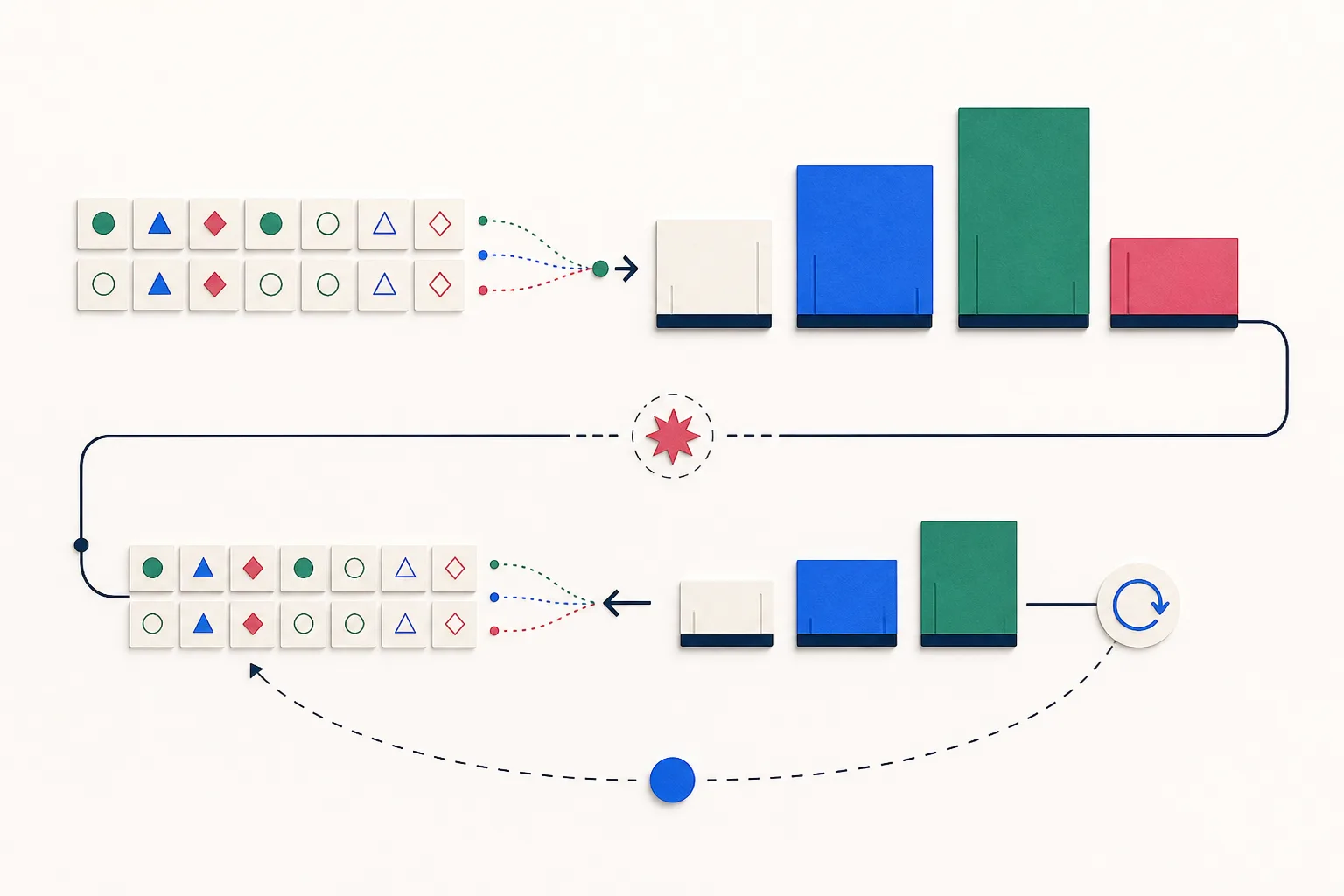
A habit tracker records whether a routine happened. It does not establish that the routine caused better output. The useful bridge is a clearly defined work outcome, aligned after the habit, across enough ordinary days to reveal both a pattern and its exceptions.
A support habit is an action you can perform, such as starting a wind-down by 10:30, taking a midday walk, planning one top task, or closing communication apps for a focus block. The outcome is what you hope may differ later, such as completing that block or reaching a defined milestone.
Do not define productivity as the number of habits completed. That makes the analysis circular. In the same way, GitHub contribution activity shows events recognized by GitHub, not the quality, difficulty, or value of a developer's work.1
| Support habit | Separate outcome | Timing | Caution |
|---|---|---|---|
| Plan one top task | Task reaches written done criteria | Same workday | Task size and interruptions vary |
| Begin wind-down by 10:30 | Next-morning focus block completed | Following workday | Sleep and morning schedule add context |
| Take a midday walk | Afternoon focus rating | Immediately after the work window | Weather and meeting load may influence both |
| Silence notifications | Planned uninterrupted minutes | During a defined block | Task difficulty still affects completion |
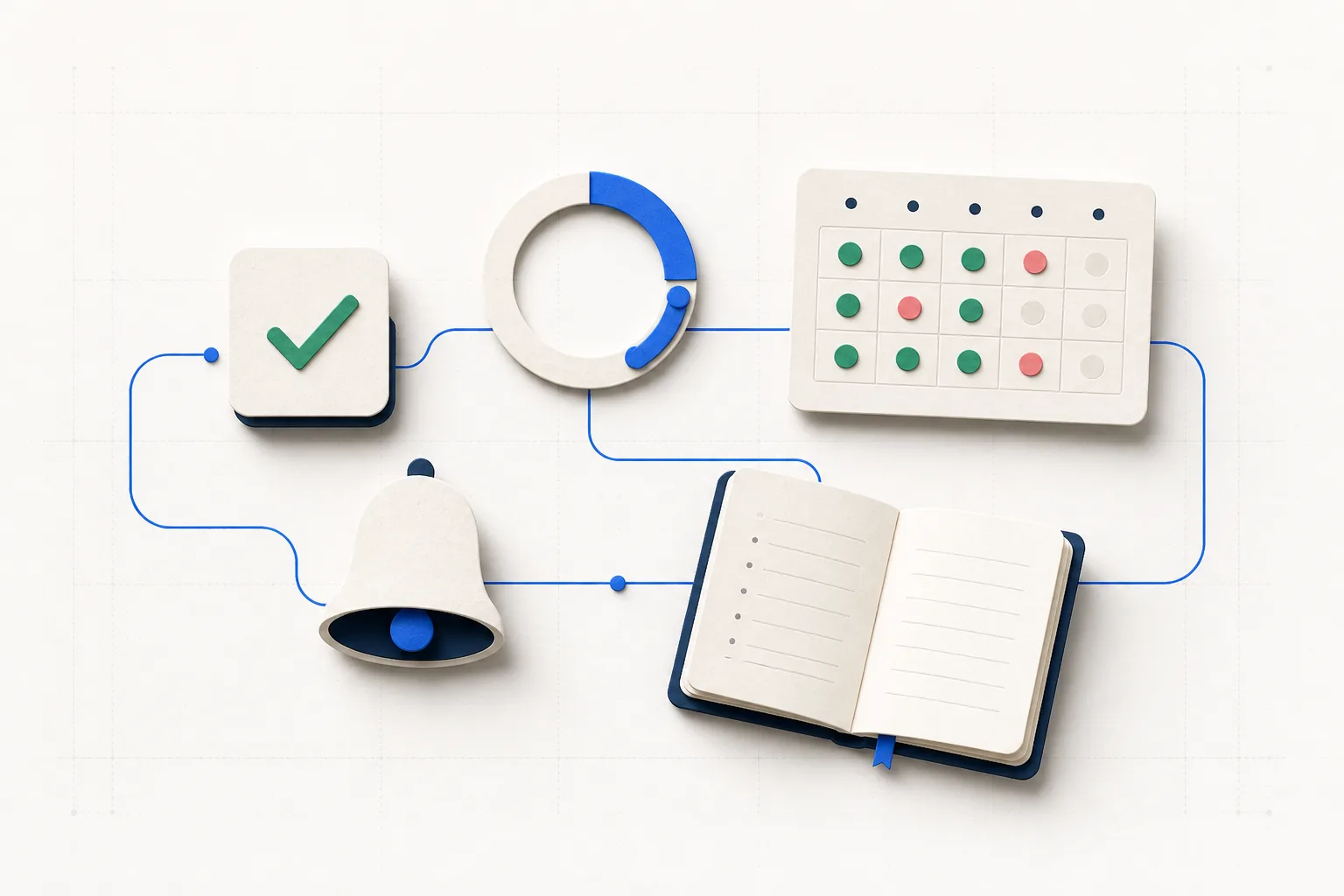
Focused habit apps are usually the better choice when reminders, quick completion, schedules, and visible streaks are the main job. Habitify emphasizes routines, reminders, charts, and integrations. Streaks focuses on scheduled tasks and Apple-platform surfaces. Loop offers a free, open-source Android tracker with local storage and no third-party analytics under its stated policy.2345
A cross-signal product such as Swaymark fits a different question: whether a habit moved together with sleep, mood, focus, GitHub activity, or optional product signals across the same dates. It is not a replacement for a dedicated streak system when reminders and rapid check-off are the priority.6
Collect several weeks before interpreting. Keep missed entries missing instead of silently treating them as failed habits. Decide whether the outcome belongs to the same day or the following day, and use that timing rule consistently.
Compare the number of completed and non-completed days, typical outcome in each group, and the full spread. Read the exceptions. If the habit occurs mostly on quiet weekends, or disappears during launch weeks, schedule and workload may explain part of the apparent effect.
If a habit repeatedly coincides with a meaningful improvement, run a bounded experiment that makes the habit easier. Change its cue, timing, or minimum version, then review the same work outcome. If the apparent relationship vanishes, keep the habit only if it has another reason to exist.
No clear relationship is useful. It may let you retire a ritual that adds maintenance but does not change decisions. Sustainable productivity is not the maximum number of green checks. It is doing important work with routines that support health, attention, and a life outside the tracker.
Put it into practice
Plain answers
It can support consistency and reflection, but logging a habit does not itself prove better output. Define and measure the work outcome separately.
Start with one or two that connect to a real question. Tracking many simultaneous changes makes the system harder to sustain and the result harder to interpret.
Not unless you know the habit did not happen. Missing and no are different values. Preserving that difference prevents a false pattern.
They are a dated activity signal defined by GitHub. They do not capture quality, difficulty, impact, private context, or all the work a developer performs.
Swaymark fits when your question crosses habits, mood, health, and work. Choose a focused habit app when reminders, streaks, and rapid completion are the primary need.
Compare focused habit trackers, flexible routine tools, private open source options, and cross-signal personal analytics to find the right fit.
Read field noteLearn how to compare brief mood check-ins with focus and meaningful work while respecting context, privacy, and causal limits.
Read field noteBuild a small, private personal analytics system that connects health, mood, habits, work, and product signals without drowning in dashboards.
Read field note